
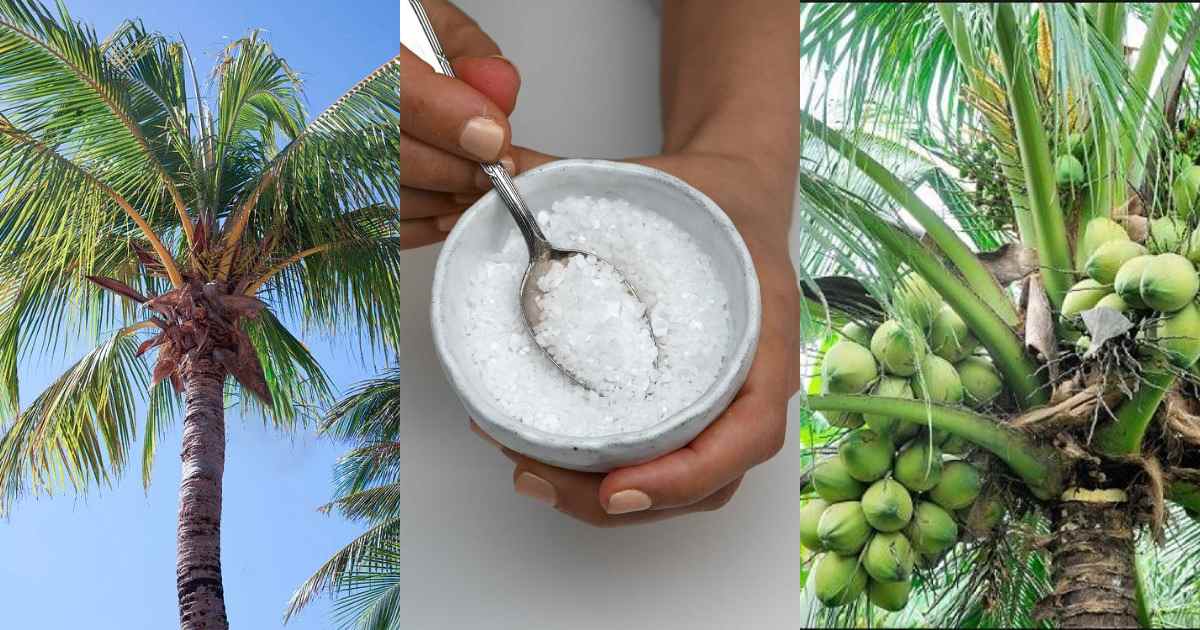
മച്ചിങ്ങ കൊഴിച്ചിൽ മാറി നാളികേരം കുലകുത്തി കായ്ക്കാൻ അടിപൊളി സൂത്രം; ഇത് ഒരു സ്പൂൺ മതി; ഏത് കായ്ക്കാത്ത തെങ്ങും കായ്ക്കും.!! Coconut Cultivation tips Using Salt

Coconut Cultivation tips Using Salt
- Planting pits: Add 2 kg salt per pit (for laterite soil) 6 months before planting; mix with 25-30 coconut husks in layers for better drainage and root growth.
- Mature palms: Apply 500g-1kg salt/palm/year around the base (1.8-2m radius basin, 25cm deep); combine with NPK fertilizers (500g N + 300g P2O5 + 1000g K2O) and 50kg FYM; best in two splits (June-July, Dec-Jan).
- Saltwater drench: Mix 1 tbsp salt in 500ml water, pour at base every 2 weeks for young trees; enhances mineral absorption.
Coconut Cultivation tips Using Salt : ഇത് ഒരു സ്പൂൺ മാത്രം മതി! മച്ചിങ്ങ കൊഴിച്ചിൽ മാറി നാളികേരം കുലകുത്തി പിടിക്കും. നൂറ് ശതമാനവും റിസൾട്ട് ഉറപ്പ്. ഇനി മച്ചിങ്ങ കൊഴിഞ്ഞു തലയിൽ വീഴില്ല! ഏത് കായ്ക്കാത്ത തെങ്ങിനും ഇത് ഒരു സ്പൂൺ മാത്രം മതി. മച്ചിങ്ങ കൊഴിച്ചിൽ മാറി നാളികേരം കുലകുത്തി പിടിക്കാൻ കിടിലൻ സൂത്രം. നമ്മളിൽ പലരും നാളികേരകൃഷി ചെയ്യുന്നവരാണ്. വർദ്ധിച്ചു വരുന്ന വിലയും തേങ്ങയുടെ ഗുണമേന്മയും ആണ് ഇതിന് കാരണം.
സ്വന്തം വീടുകളിൽ ഒന്ന് രണ്ട് തെങ്ങുകൾ വെച്ചുപിടിപ്പിക്കാത്തവർ ആയി ആരും തന്നെ കാണില്ല. തെങ്ങുകളിൽ നിന്നും അധികം നാളികേരം ലഭിക്കാത്തത് പലരും നേരിടുന്ന പ്രശ്നങ്ങളിൽ ഒന്നാണ്. തെങ്ങിന് ഉണ്ടാകുന്ന കീടബാധയും മച്ചില് ലഭിക്കാതിരിക്കുക ഇതൊക്കെ കൊണ്ടാണ് നമുക്ക് അധികം നാളികേരം ലഭിക്കാത്തത്. ഒരു തെങ്ങിൽ നിന്ന് ധാരാളം ഉൽപ്പാദനക്ഷമത വർധിപ്പിക്കുക എങ്ങനെ എന്ന് നോക്കാം.
- Soil Salinity Management: Salt can help manage soil salinity levels, but excessive salt can harm coconut palms.
- Pest Control: Salt can be used to control certain pests, like nematodes, but its effectiveness and safety depend on the application method and dosage.
സാധാരണയായി ഒക്ടോബർ നവംബർ മാസങ്ങളിലാണ് തെങ്ങിന് തടം തുറന്നിട്ട് അതിൽ കല്ലുപ്പ് ഇടുന്നത്. കല്ലുപ്പ് ഇടുന്നതു എന്തിനാണെന്നാൽ ഉപ്പിൽ സോഡിയം ക്ലോറൈഡ് ധാരാളമടങ്ങിയിട്ടുണ്ട്. ഇത് തെങ്ങിന്റെ ഉത്പാദന ക്ഷമത വർദ്ധിപ്പിക്കുവാനായി വളരെ നല്ലതാണ്. ഈ മാസങ്ങളിൽ ധാരാളം മഴ ലഭിക്കും എന്നതിനാൽ തെങ്ങിന് തടം തുറന്നിട്ട് ഒരു തെങ്ങിന് രണ്ട് കിലോ ഉപ്പ് എന്ന കണക്കിൽ തെങ്ങിന് ചുറ്റും വിതറിയിട്ടു കൊടുക്കുക.
അതിനുശേഷം നന്നായിട്ട് വെള്ളം ഒഴിച്ചു കൊടുക്കുക. ശേഷം മണ്ണിട്ട് മൂടുക. അതുപോലെതന്നെ നേരിടുന്ന ഒരു പ്രശ്നമാണ് കൊമ്പൻചെല്ലിയുടെ ഉപദ്രവം. വേപ്പിൻപിണ്ണാക്കും ഉപ്പും കൂടി നന്നായി മിക്സ് ചെയ്തതിനുശേഷം തെങ്ങിന്റെ കൂമ്പുകളിൽ ഇട്ടു കൊടുക്കുകയാണെങ്കിൽ ഇവയുടെ ഉപദ്രവവും മാറുന്നതാണ്. എങ്ങിനെയെല്ലാമാണ് ഇതെല്ലം ചെയ്യേണ്ടത് എന്ന് വീഡിയോയിൽ വിശദമായി കാണിച്ചു തരുന്നുണ്ട്. വീഡിയോ കണ്ടു നോക്കൂ. Video Credits : PRS Kitchen
Coconut Cultivation tips Using Salt
Using salt in coconut cultivation is a traditional practice followed in some coastal and rural areas, mainly to supply minerals and improve palm health. When used carefully and in small quantities, salt can be beneficial.
Benefits of Using Salt for Coconut Trees
- Supplies sodium and chloride, which coconut palms can tolerate better than many crops
- Helps improve nut size and yield in some soil types
- Useful in coastal or sandy soils where mineral deficiency is common
- Can help in improving overall palm vigor when combined with organic manure
How to Apply Salt
- Use common rock salt (not refined table salt)
- Apply 500 g to 1 kg per mature coconut tree per year
- Mix salt with soil and apply in a circular trench 1–1.5 m away from the trunk
- Best time to apply: before monsoon so rain helps dissolve and spread minerals
- Always apply along with organic manure or compost
Important Precautions
- Do not overuse salt – excess salt can damage roots
- Avoid use in clay-heavy or poorly drained soils
- Do not apply to young seedlings
- Never apply salt directly at the base of the trunk
- Monitor soil condition regularly

Comments are closed.